Week 1 · Can I be?
FM1 · Grounded · The World
Coming to terms with the reality of one’s existence, or ‘being in the world’.
This week:  Support ·
  Space ·
  Protection
 Listen first · 17 min
Aestra Research › Psychedelic Preflight Checklist
Twelve questions to ask yourself before a psychedelic journey
If pilots can run a checklist, so can we. Mid-flight whoopsies can be tricky to handle.
Preparation is more than set and setting. In the four weeks before a journey, we can slow down, tune in and reflect.
The twelve conditions come from Alfried Längle's Existential Analysis. His account is that a person needs four things in order to say yes to their own existence, and that each of the four rests on three conditions. Twelve in all. They were being asked in consulting rooms for decades before anyone pointed them at psychedelics.
One Fundamental Motivation a week, in order. They build on one another: the second assumes the first, and the fourth assumes all three. Please listen to each meditation before you look at that week's questions.
FM1 · Grounded · The World
Coming to terms with the reality of one’s existence, or ‘being in the world’.
This week: Support · Space · Protection
Listen first · 17 min

FM2 · Relationships · Life
Coming to terms with the reality of one’s life.
This week:  Time ·
  Closeness ·
  Relating
Listen first · 31 min

FM3 · Offer · The Person
Coming to terms with an awareness of one’s identity.
This week:  Attention ·
  Appreciation ·
  Justice
Listen first · 37 min

FM4 · Wholeness · Meaning
To participate and be open to relationships and wider contexts (horizon) from which personal meanings are discovered.
This week:  Greater Context ·
  Field of Activity ·
  Future Value
Listen first · 44 min
The meditations, with full transcripts and captions, live at research.aestra.ca/ea-meditations.
If a question comes up empty
Some of these questions may come up empty, and that is worth as much as a full page. Perhaps more. An empty line is telling you something, and it does not require you to do anything about it today. You can just sit with it for now. And if several come up empty at once, or if what surfaces is more than you want to hold on your own, I encourage you to take it to someone before you take it into a journey: a therapist, a doctor, or a person who knows you well.
The people this rests on, in two traditions
The structure is Längle's and the questions were already written. Almost nothing here was invented for the talk.
Academic
Bartlett, C., Marshall, M., & Marshall, A. (2012). Two-eyed seeing and other lessons learned within a co-learning journey of bringing together Indigenous and mainstream knowledges and ways of knowing. Journal of Environmental Studies and Sciences, 2, 331–340. https://doi.org/10.1007/s13412-012-0086-8
Buber, M. (1937). I and thou (R. G. Smith, Trans.). T. & T. Clark. (Original work published 1923)
Frankl, V. E. (1985). Man's search for meaning. Simon & Schuster.
Längle, A. (2002). Existential fundamental motivation. International Federation of Psychotherapy.
Längle, A. (2011). The existential fundamental motivations structuring the motivational process. In Motivation, consciousness and self-regulation (pp. 27–42). Nova Science Publishers.
Längle, A. (2020–2022). Student manuals for existential analysis (logotherapy): 1st to 4th fundamental motivations. Existential Analysis Society of Canada.
Lima, M. de (2014). The case of María Sabina. Palgrave Macmillan.
Marshall, A. (2023). The gift of two-eyed seeing. First Nations Education Administrators Association.
Nelson-Zutter, G. (2026). Accessing Längle's four fundamental motivations through guided meditation [Audio recordings]. Zenodo. FM1 · FM2 · FM3 · FM4
Shumskiy, V. B., Osin, E., & Ukolova, E. M. (2017). Psychometrics in pursuit of existence: A new version of the test of existential motivations. Existenzanalyse, 34, 123–138.
Siff, S. (2018). R. Gordon Wasson and the publicity campaign to introduce magic mushrooms to mid-century America. Revue française d'études américaines, 156, 91–104. https://doi.org/10.3917/rfea.156.0091
Each week’s one-line description is Längle’s own framing of that Fundamental Motivation’s core task, quoted from the EA 4FM codebook, as are the “when it is missing” lines on the worksheets.
The twelve questions on the worksheets are adapted from the Test of Existential Motivations (Shumskiy, Osin & Ukolova, 2017), opened out so each can be answered rather than rated, and paired with its negative pole. Längle's own diagnostic question sits under each one.
Images used in the talk
Airbus A320 schematic. Dtom, public domain, via Wikimedia Commons.
M. C. Escher, Relativity (1953). © The M.C. Escher Company B.V. Shown in a non-commercial talk; permission required for any further use.
Truffle ceremony room. Spinoza.
Photographs by Alessandro Erbetta, Chris Lawton, Mohammad Ali Mohtashami, Luke Porter and Dns Dgn, via Unsplash, used under the Unsplash License.
Viktor Frankl. Photo by Prof. Dr. Franz Vesely, CC BY-SA 3.0 DE, via Wikimedia Commons.
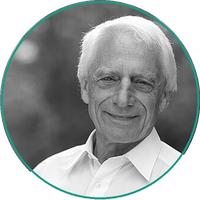
Alfried Längle. Photo by Regina Längle, CC BY-SA 4.0, via Wikimedia Commons.
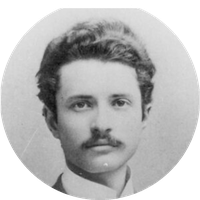
Martin Buber as a student in Vienna, c. 1896. Martin Buber Archive, The National Library of Israel, Jerusalem / Courtesy of the Martin Buber Literary Estate. Reproduced from Centrum Judaicum.
María Sabina Magdalena García and Elder Albert Marshall. Photographers to be confirmed.
With thanks
This work would not exist without the knowledge keepers who carried these medicines: María Sabina Magdalena García and the Mazatec people of Huautla de Jiménez above all, whose knowledge reached the West at a cost to her that she did not consent to and did not recover from. Elder Albert Marshall's Etuaptmumk, Two-Eyed Seeing, is the practice this page hopes to honour: the strength of Indigenous knowledge in one eye, the strength of Western knowledge in the other, and the skill to use both together.