



1FM · Can I be here?

The World - read along as the meditation plays.

Prerequisites: Support · Space · Protection

CC BY-NC-ND 4.0

Tap any phrase to jump there and play. The current phrase highlights as it's spoken.

Transcript (PDF) Plain text Captions (VTT) Word timings (CSV)
Cite
Source

The following is a meditation for the first fundamental motivation of existential analysis, helping us answer the question of can I be with an affirmative yes.

The speaker and creator is Graham Nelson-Zutter.

Please take a moment to find a seated position where there's support for the back and an ability to place your feet flat on the ground.

It may also be helpful to have a posture where your back is fairly vertical and there's little strain on your neck, perhaps where your head is centered above your spinal column.

If this isn't possible, the variation includes back support where there are pillows that can support the weight of your neck.

The goal here is to not sit with any strain and to find some ease in your posture.

In addition to your feet being planted flat on the floor, I invite you to place your hands on your lap.

If it's possible to close your eyes today, I invite you to do that as well.

If for any reason it doesn't feel safe to keep your eyes closed, go ahead and open them and find a place where you can rest your gaze, somewhere where there isn't any activity or distraction.

Let's start by connecting with the experience of our feet on the ground,

noticing how it is for the bottoms of our feet to be in contact with the floor.

Perhaps we're wearing socks or shoes or slippers.

Maybe there's a carpet between our feet and the floor.

Just taking a moment to notice these layers and textures and materials between our feet to the floor.

Perhaps there's a feeling of softness and firmness

and also noticing the flatness and stability of the floor.

The stillness of the floor.

See if it's possible to place your attention under your toes, noticing what is it like for my toes to be connected with the floor?

Shifting to the pads of your feet, noticing the contact there and the arches of your feet and also your heels.

Be noticing the difference in pressure between your toes and the floor and your heels on the floor,

seeing if you can draw your attention to your ankles, up to your calf muscles.

Perhaps this is a point where there's contact with your chair or couch.

If that's present, just noticing that contact beginning

and then shifting towards the back of your knees, around the hinge of your knees, starting with your hamstrings.

As you travel down your hamstrings, noticing the contact with your chair or couch.

Perhaps there's a shift or a change in pressure as you move your focus from the back of your knees down your hamstrings towards your glutes,

noticing the difference in pressure below your torso versus your thighs.

Perhaps here you can perceive that the couch or chair that you're on also has this mix of soft and firmness.

Next, see if it's possible to shift your awareness to your lower back, noticing where your hips and back connect and where the support from your chair starts to come from behind.

Becoming aware of the shift of support from below and under to this new form of support from behind.

Gently traveling up to your mid -back, following your spinal column,

moving up towards your shoulders, your shoulder blades, noticing the sensations of support for your back from behind,

and seeing if it's possible to shift your awareness to your neck.

Perhaps there's support here, contact or not.

If your head is vertically above your spine, just noticing how your head is resting on your neck and shoulders.

And if you have pillows supporting your neck and head, just noticing that form of support as well.

And be asking yourself the question, is it possible to receive even more of this support at this time?

Next, see if it's possible to shift your awareness towards your breathing without the need to change how you're breathing. When

you inhale, perhaps you experience some coolness around your nostrils or lips.

And when you exhale, perhaps there's some warmth around your nostrils and lips.

When you inhale, maybe you can feel the sensation in your chest, the sensation of expansion and opening.

And when you exhale, perhaps you can feel the sensation of rest and release.

Noticing that with every breath, the space within you becomes present.

Next, I invite you to notice your skin.

Taking a moment to become aware of the places where your skin is exposed to the air.

Perhaps this is your hands or wrists or arms or neck and your face.

Just noticing these areas of the body that are in direct contact with the air.

Taking a moment to experience what it's like to touch the air to your skin.

Maybe you feel coolness or warmth from the air around you.

Perhaps you notice stillness or movement of air.

Taking a moment also to notice your skin.

That your skin seems to have two sides of it on one side is the part that connects with the outside world.

And the other part holding you and your body.

Maybe noticing the flexibility of the skin.

And see now if you can expand your awareness to your clothing.

Noticing the parts of the body that have clothing.

Perhaps you have the sensation of different fabrics and textures.

Maybe even light pressure.

Perhaps there's a difference in temperature.

Noticing as well that your clothing is like a second skin.

It too has this inside and outside quality.

On the outside is the world around you.

And on the inside of your clothes is you.

Wherever you go today your clothing is there with you.

And so is your skin.

Both working together to provide this flexible boundary of protection wherever you go.

Perhaps noticing that your skin and your clothing don't really require your active involvement. They're just there. They're all connected to part of you.

There's nothing here for you to do.

This natural and flexible boundary is here and does not require your intervention.

It just is. It will follow you where you go.

You can just be with it.

And the same is true of your breathing and breath.

Whether you focus on your breath or not, your body will continue to breathe for you.

You've been breathing this time and you will continue to breathe.

The same is true of the support that is here for you.

This couch, this chair, this floor.

They're here.

They don't require you to do anything to receive their support.

You're invited to shift your awareness from having to do something to instead be

at this moment and this time.

The support is here at this moment and this time.

There's space in your chest to breathe.

And at this moment and this time your skin and your clothing provide this natural flexible boundary to protect you and your body.

When it feels appropriate, taking your time,

I invite you to gently open your eyes and return to this shared space.
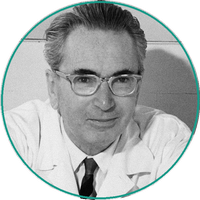
Influences & Sources

Key contributors to Existential Analysis, Embodiment, and Mindfulness

References (APA)

Albertyn, C. P., Richard, J., Shore, R. J., & Carlson, L. E. (2026). Mindfulness-Based Psilocybin-Assisted Therapy (MB-PAT) for cancer-related demoralization in Canada: The case for a hybrid group-based delivery model. PsyArXiv. https://doi.org/10.31234/osf.io/yrgkf_v1

Aldridge, M. A., Nandacara, Simpson, A., O’Brien-Kop, K., & Priyadarshana, W. (2025). Second-generation mindfulness-based interventions (SG-MBIs) for university students: A scoping review. Public and Global Health. https://doi.org/10.1101/2025.10.20.25338430

Angermayer, M. (2022). Existential Analysis with the Body – Happening and Appropriation. Existenzanalyse, 39, 4–13. https://www.existenzanalyse.net/aktuelle-ausgaben/inhalt/ea-01-2022-inhalt/

Angermayr, M. (2026). Existenzielles Grounding: Die Personale Existenzanalyse mit dem Körper (PEAK): Ein leibphänomenologischer Prozessrahmen zur existenziellen Sinnfindung. Psychotherapie Forum, 30(1–2), 63–69. https://doi.org/10.1007/s00729-026-00311-y

Beng, T. S., Chin, L. E., Guan, N. C., Yee, A., Wu, C., Jane, L. E., & Meng, C. B. C. (2015). Mindfulness-Based Supportive Therapy (MBST): Proposing a Palliative Psychotherapy From a Conceptual Perspective to Address Suffering in Palliative Care. American Journal of Hospice and Palliative Medicine®, 32(2), 144–160. https://doi.org/10.1177/1049909113508640

Binswanger, L. (1963). Being-in-the-World: Selected Papers of Ludwig Binswanger. Basic Books. https://archive.org/details/beingintheworlds00bins/page/n5/mode/2up

Chambers, R., Stoliker, D., & Simonsson, O. (2023). Psychedelic-Assisted Psychotherapy and Mindfulness-Based Cognitive Therapy: Potential Synergies. Mindfulness, 14(9), 2111–2123. https://doi.org/10.1007/s12671-023-02206-4

Davidson, R. J., Kabat-Zinn, J., Schumacher, J., Rosenkranz, M., Muller, D., Santorelli, S. F., Urbanowski, F., Harrington, A., Bonus, K., & Sheridan, J. F. (2003). Alterations in Brain and Immune Function Produced by Mindfulness Meditation. Psychosomatic Medicine, 65(4), 564–570. https://doi.org/10.1097/01.PSY.0000077505.67574.E3

Eleftheriou, M. E., & Thomas, E. (2021). Examining the Potential Synergistic Effects Between Mindfulness Training and Psychedelic-Assisted Therapy. Frontiers in Psychiatry, 12, 707057. https://doi.org/10.3389/fpsyt.2021.707057

Existenzielles Grounding Existenzanalytisch fundierte Leibarbeit und Körperpsychotherapie (1. Auflage 2026). (2026). Psychosozial-Verlag.

Fisher, H. M., Check, D. K., Somers, T. J., Kelleher, S. A., Majestic, C., Yu, J. A., Reed, S. D., Li, Y., Olsen, M. K., Lerebours, R., Keefe, F. J., Steinhauser, K. E., Breitbart, W. S., & Winger, J. G. (2023). Meaning-centered pain coping skills training for patients with metastatic cancer: Protocol for a randomized controlled efficacy trial. Contemporary Clinical Trials, 135, 107363. https://doi.org/10.1016/j.cct.2023.107363

Gorman, I., Nielson, E. M., Molinar, A., Cassidy, K., & Sabbagh, J. (2021). Psychedelic Harm Reduction and Integration: A Transtheoretical Model for Clinical Practice. Frontiers in Psychology, 12, 645246. https://doi.org/10.3389/fpsyg.2021.645246

Kabat-Zinn, J. (1982). An outpatient program in behavioral medicine for chronic pain patients based on the practice of mindfulness meditation: Theoretical considerations and preliminary results. General Hospital Psychiatry, 4(1), 33–47. https://doi.org/10.1016/0163-8343(82)90026-3

Kabat-Zinn, J. (2003). Mindfulness-based interventions in context: Past, present, and future. Clinical Psychology: Science and Practice, 10(2), 144–156. https://doi.org/10.1093/clipsy.bpg016

Kabat-Zinn, J. (Director). (2022, December 23). 5-minute Guided Meditation with Jon Kabat-Zinn [Video recording]. MasterClass. https://www.youtube.com/watch?v=7WnZisfYMsE

Kabat-Zinn, J., Lipworth, L., & Burney, R. (1985). The clinical use of mindfulness meditation for the self-regulation of chronic pain. Journal of Behavioral Medicine, 8(2), 163–190. https://doi.org/10.1007/BF00845519

Kabat-Zinn, J., Massion, A. O., Kristeller, J., Peterson, L. G., Fletcher, K. E., Pbert, L., Lenderking, W. R., & Santorelli, S. F. (1992). Effectiveness of a meditation-based stress reduction program in the treatment of anxiety disorders. American Journal of Psychiatry, 149(7), 936–943. https://doi.org/10.1176/ajp.149.7.936

Längle, A. (1992). What Are We Looking for When We Search for Meaning? Ultimate Reality and Meaning, 15(4), 306–314. https://doi.org/10.3138/uram.15.4.306

Längle, A. (2018). To Live With Inner Consent: An Existential Analytical Approach to a Fulfilling Life [Conference presentation]. EHI & PI Conference 2018. https://www.laengle.info

Nilsson, H. (2014). A four-dimensional model of mindfulness and its implications for health. Psychology of Religion and Spirituality, 6(2), 162–174. https://doi.org/10.1037/a0036067

Nilsson, H., Bülow, P. H., & Kazemi, A. (2015). Mindful Sustainable Aging: Advancing a Comprehensive Approach to the Challenges and Opportunities of Old Age. Europe’s Journal of Psychology, 11(3), 494–508. https://doi.org/10.5964/ejop.v11i3.949

Nowakowska, A., Draczyńska, D., & Anczewska, M. (2024). Existential Analysis as a method of intervention for patients experiencing relational trauma. Psychoterapia, 206(3), 41–54. https://doi.org/10.12740/PT/176072

Posch, B. M. (2023). Die Bedeutung einer achtsamkeitsbasierten Ankommensübung zu Beginn einer Therapiestunde im Lichte der vier Grundmotivationen [Abschlussarbeit, Fachspezifische Ausbildung in Existenzanalyse]. https://www.existenzanalyse.org/wp-content/uploads/Posch-2023-AA.pdf

Simonds, C. H. (2023). View, meditation, action: A Tibetan framework to inform psychedelic-assisted therapy. Journal of Psychedelic Studies, 7(1), 58–68. https://doi.org/10.1556/2054.2023.00255

Winger, J. G., Kelleher, S. A., Ramos, K., Check, D. K., Yu, J. A., Powell, V. D., Lerebours, R., Olsen, M. K., Keefe, F. J., Steinhauser, K. E., Porter, L. S., Breitbart, W. S., & Somers, T. J. (2023). Meaning-centered pain coping skills training for patients with metastatic cancer: Results of a randomized controlled pilot trial. Psycho-Oncology, 32(7), 1096–1105. https://doi.org/10.1002/pon.6151

Winger, J. G., Ramos, K., Kelleher, S. A., Somers, T. J., Steinhauser, K. E., Porter, L. S., Kamal, A. H., Breitbart, W. S., & Keefe, F. J. (2022). Meaning-Centered Pain Coping Skills Training: A Pilot Feasibility Trial of a Psychosocial Pain Management Intervention for Patients with Advanced Cancer. Journal of Palliative Medicine, 25(1), 60–69. https://doi.org/10.1089/jpm.2021.0081

Zirks, I. (2022). Hakomi – Experience-Oriented Psychotherapy. Existenzanalyse, 39. https://www.existenzanalyse.net/aktuelle-ausgaben/inhalt/ea-01-2022-inhalt/